
 Apple Podcasts

 Spotify

 Youtube Music

 Amazon Music
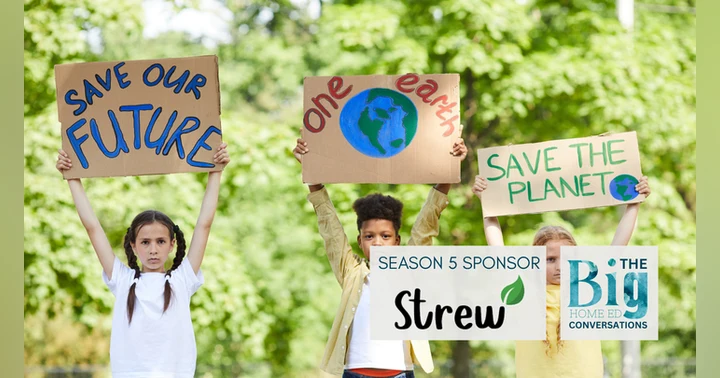
Home Educating UK Topic Challenge: Raising Brave Kids — Activism, Justice & Quiet Protest
In this week’s episode of The BIG Home Ed Conversations Podcast, Kelly Rigg and Ashley Vanerio dive into a big question many home educating UK families wrestle with: how do we teach our children about activism, justice, and using their voice — without overwhelming them?
We talk honestly about:
-
Why “quiet protest” (like choosing elective home education) is still activism
-
How kids can learn courage, integrity, and a strong moral compass through everyday life
-
Exploring activism through books, documentaries, and values-led conversations (including learning about Greta Thunberg)
-
How to handle tricky conversations with people who don’t “get” home education (and the judgement that can come with it)
-
Practical ideas you can try at home: writing letters to companies, researching issues together, and building confidence through small actions
-
A fun evolution-inspired activity that sparked brilliant conversations about climate, deforestation, and change
Whether you’re fully in flow or just finding your feet with Home Education, these home education resources will help you to find your way through this topic. This episode is a reassuring reminder: our children’s opinions matter, and they’re never “too young” to care.
Sponsor note: This season is sponsored by Strew (the home education logging app). Strew are running a survey right now and they genuinely want your feedback on what features you want, what you love, and what you’d change. There’s also a chance to win £25 Amazon vouchers.
Survey link: https://strew.app/the-2026-strew-survey-prize-draw/
Keyword section:
home education uk, home educating uk, elective home education, homeschooling uk, home schooling, home educating, home education resources uk, alternative education, deschooling, unschooling, child-led learning, neurodivergent families, adhd, autism, mindset, values education, kids activism, teaching kids activism, social justice for kids, climate change education for kids, writing letters to companies, raising socially conscious kids, parenting outside the school system
0:15 Hello everybody, welcome to another episode of the big Home Ed conversations. My name is Kelly Rigg. I'm a home educating mum of two and a qualified mindset and ADHD coach. I'm passionate about supporting parents and neurodivergent families as they navigate children not OK at school and ultimately then the transition from mainstream schooling into home education. I'm here together with my Co host Ashley Venario, A fellow home Ed mum of three and former primary teacher. We created the big Home Ed Conversations podcast with what began as honest, heartfelt talks around the coffee table and it's now grown into a space where hundreds of listeners now tune in for real, unfiltered conversations about alternative education, mindset and educational philosophies.
0:55 We cut through the noise and focus on what really matters to home educating families. As you will know by now, this season has been sponsored by Stru. It's a home education logging app that was designed by a home educating mum and her brother here in the UK. We are really passionate on this podcast about supporting our fellow home educating families as they create businesses and essentially try to create income for them and their families using the skills that they develop as home educating parents as well. There's so much skill in raising our children that ultimately so many of us really benefit from accessing. They have told me today that they are running a survey. So if you are now using this Drew and you've been given it a try since you've been listening to us talk about it or if you're considering doing so, they basically suggested to us, we let you know that they are running a survey at the moment that basically calls on you to give them any ideas you've got about what you want Drew to have. What do you like about it?
1:50 What don't you like about it? And essentially so that he can take on those ideas and actually make some changes to the app and add features that we think will be really useful for us as AUK home educating community. And what I really love about this is actually the fact that since I've been talking to Woody since he first reached out to us, he has been so open to every suggestion I've made. So many of them have already been actually acted upon and have changed in the app itself. But it helps him to kind of develop an understanding from a user who's actually engaged and kind of interested in all the features and paying attention to all the features. He's really taken that information on board. And I think it's really important to remember that if we want these things to be beneficial to us as a community, then having our say is really important.
2:36 And he really does want to hear it. So if you go and fill out that survey, we'll make sure the link is obviously in the description for this episode, but you'll basically be in there to win £25 worth of Amazon vouchers. So it's worth worth giving it a go and let them know what you think. But I know that you've had some brilliant ideas for it as well actually, haven't you? And you sent some stuff over to him and he's been so receptive to everything we've said so far. Yeah, it's definitely really nice to have a back and forth with the developer and be able to give that real time feedback and make it something that works for you. And like you said, it's just been such a reciprocal process, an experience and I think one that sounds like if anyone else has great ideas, share them.
3:23 Because if you're thinking it, I'm sure at least a few other moms or dads are thinking it too. So it really don't, don't be shy, it benefits everyone. For sure. So cracking up with this week's topic then people. Well, I know that a lot of us and the home educated community are already fairly active in the political game. And I'd like, I think I'd say that like honestly, because we, we fight hard for our rights and we care an awful lot about maintaining our freedoms. And so our kids by osmosis are probably picking up an awful lot already about how important it is to have your say and to stand with groups of people who are fighting for good in this world.
4:05 But I have to say I have always shield away from trying to take them along to things like protests and things more from a safety perspective, partly because they are neurodivergent and crowds do overwhelm them. And I have always found myself thinking that's going to end up being insanely stressful for all of us. But what I did find interesting as we started delving into this topic was how in awe they were of some of the people we looked at and, and how such simple acts sometimes could actually make such an impact. And I think it really empowered them. Actually. It's we've had some fantastic exchanges back and forth talking about it and watching some documentaries and, and doing some activities with them.
4:46 And I have to say, I've really felt like this is a great empowering subject to kind of take with both hands and really put some attention towards. How have your girls received it? Actually, have they enjoyed it? I'll have to preface this with we are traveling, so the amount of time that we have spent on this is not equal to the prior weeks. That said, I have heavily leaned into books for this. Just sort of just like working into stuff that we are still doing on our daily, like on the daily, which is, you know, reading stories before bed and kind of just having ongoing random conversations. So I don't think they really realize that this is even something that I'm specifically doing like on purpose. I think they're just like, oh, mommy has new books for a story time.
5:40 But so one of the things that I did is I was like, OK, let me let's think about like, what are the like characteristics of people who are like social change leaders? And like, maybe then what I'm going to do is look into how to build those characteristics in children. Like what are some of the things that we might do to sort of teach toward that, toward that core belief? And so obviously, like strong sense of justice, courage, integrity, like all these things that are kind of hard to teach.
6:22 They just sort of come through like modeling and experience and kind of like family values that are like you said, kind of just like through osmosis, like within our four walls, they're going to, they're going to get. But so I I kind of went towards like finding books about those people. And if they happen to specify like that, actually like, who's the one gal Greta is that? We had. Yeah, I was trying to find a book about her that was like 4 kids, but I couldn't find one. And to be fair, I didn't dig too deep. I just went to our library, into a local bookstore and then I the GameStop there.
7:03 But I did go into like, do you got do you know in England, I don't know if you have them the same, but they're like The Who was books or The Who is books. Yeah. There's lots of like the big ideas books as well, which are really good, yeah. Yeah. But so like, these ones focus specifically on a person. So you can't like, who was George Washington, who is Barack Obama? And like, it just depends on if the, like, how it's worded, obviously, if the person is still alive. I got this one that was who was Booker T Washington, because I thought that was just a good one about a former slave who became like a very influential speaker and author and obviously like worked towards building awareness on the injustices for African Americans.
7:54 So that was 1. And it was just sort of like, again, going towards just building a good moral compass and showing that there are people who are kind of like standing up for rights who did that. And then I did find this one really cute book called I am 1A book of Action, which is really nice. And it's definitely more of a like picture book, very like for little kids, like little little kids. But it's very cute and has great pictures. And I got one book that I don't recommend unless you have older children who are like OK with like pretty raw reality depicted in books. I started reading it just myself and I was like, OK, my kids aren't ready for this.
8:36 But it's called Refugee by Alan Gratz. It's GRATZ and this is a story that follows 3 children and it is really good. But like, the first chapter is so intense that I was just like, OK, that I think that's for older kids. But I was talking to my friend about it and her son read it and he's 12. So I think my 12 year old's not ready for it. Yeah. I think emotional maturity and if they'd be affected by it, I suppose it's good. Idea to I just think she would have nightmares like I I just think it would be really I don't know.
9:17 But then at the same time, it's like, oh, it would be good to expose these children. I mean, the child in the book is 11, so. Yeah. Exactly. It is reality that these that children are faced with much sooner than like, you know what our very privileged children just, you know, for having a house and living in a place where they're not, you know, we're not at war. It's not directly involving them. I think what one of the things which I found myself thinking as I was talking to my 2 about this, because obviously they're still quite young as well, like both under 10. And I was quite cautious of trying to find, for example, a documentary that was actually appropriate that it wasn't going to like something really graphic or obviously very, very distressing to see.
10:01 Because I think initially when I was thinking about this is actually, I've always said like what I always always found myself thinking, well, what can one person do? Like we can do the little things. We can recycle and we can have good beliefs and we can make sure we don't hurt animals and we can be a good person. We can drive sensibly. We can try and be economic. We can put solar panels on our roof. Like we can do things. And absolutely all of those little actions add up to something big. But ultimately, I have always found myself wondering what to protests really do. Like, how do people actually get themselves really heard by the people who can actually make an impact? And it was something which I did find myself thinking too as I was talking to about things and not wanting to really upset them.
10:43 But at the same time, as we were learning about Greta Tunberg, for example, I hope I'm pronouncing that correctly. She was super empowering. We did watch a short documentary about her on Netflix. It was the the I think it's live in Leeds. It's the one that's been Co created with the Duke and Duchess of Sussex. But I'll find out the proper one anyway. I'll make sure I write it properly in the description. But it was, it was a really good documentary. I've we have rewatched, we've watched the Greta Thunberg episode. That one is completely fine for younger children. I'm just I'm assuming some of the other ones might be for a bit more graphic because there is rated 16 plus. So there might be some of the episodes might be a bit more intense, but that one was it's really good because it showed a child basically going on a school strike and just sitting on the street with a sign that says she was she was striking for climate change.
11:38 And essentially the number one thing that I really took from what she was saying was that it's all about trust and belief. That if we listen to our children and show them that we are listening, that we hear them, that we care about what they care about. And when they are interested in something, learning about something, is concerned about something that we don't just fob them off or say like, oh, well, there's nothing you can do about that or like whatever. It's that encouragement, I guess to kind of go, yeah, OK, I hear you. That's something to be really concerned about. What can we do about it? Like what do you want to do about it? And whether that's writing a letter to a company, whether that's going and joining a protest, whether it's raising some money by doing something out in the world I could a charity run or something that. Yeah, I think the number one thing really is to listen to them and to know that they are worth listening to. And I honestly believe that that that will help to foster anything like this, any activism they might have interest in the future is to kind of go, yeah.
12:38 And you know what? You're right to be mad about that and encourage it and not to feel like you should be trying to get them to calm down or wait until they're older, but actually allow them to push it now if they want to, if they care about it enough to show them that they have a voice and they're allowed to use it even at a young age. Yeah, yeah. I mean, they're not not people right there. They are fully formed individuals and their their opinion matters. I think this kind of ties back into an episode we did last season or the season before about ageism and just not necessarily valuing children because we just see them as small and not yet fully formed humans.
13:23 But they they are and or whatever. Yeah. Yeah. Obviously they don't have the same experiences and world views as as an adult, but they they are still people and important in their opinions and values matter. Yeah. I. Think that's the thing sometimes as adults we can become quite cynical or pessimistic and. We. We might have fought for things, we might have cared a lot about things at some point. And that kind of almost that innocence can be the real driver for change because they can they can simplify a problem so nicely and kind of go, but this just makes sense. Like it should just be this way. Like all of the people making an absolute fortune, for example, in the oil and gas industries, etcetera, that obviously countries are on their knees to those companies and the infrastructure needed to change. And she was like, it makes sense. Why are we not just doing it like the planet will burn. What do we want?
14:21 Do we want to die or do we want to have a planet that's still here in like 20-30 years? Like you guys need to stop. It needs to stop. We have to change. And you guys are just ignoring the science. And I thought it was really interesting kind of seeing how the kids were responding to it so that when we were watching the documentary, I had so many like Wows and Oh my goodness, look at that many people. Like it's gone from just her sitting on the street to having like a whole crowd around her to having the news come and talk to her, to having people across the whole world campaigning with her like that must be so amazing. Like, can you can feel the goosebumps. You can see the looks on their faces were just like, Oh my goodness, like that's incredible.
15:02 Like, look what she did. And it led to a really great conversation. I learned so much actually about what EU KS current climate action policies are and what we're doing about it. And obviously we tended to be kind of approached this initially from that kind of angle. So we are doing the rainforest as a topic at the moment. So that was kind of helpful in a way because there's already a lot of kind of protest social change going on around mass agriculture and the destruction of the rainforest and deforestation and like habitat loss, etcetera. And so there's already an awful lot of information about that thankfully in the world. So we're able to pull on that quite a bit.
15:42 So we did come out this from a very much a climate and like animals and caring for our planet kind of angle. But I was saying to them as well, like there's so much that was illegal, not allowed. And we it takes in many, many voices, people being strong and brave and speaking up and saying, no, I'm not happy about this. And it does does make an impact gradually. It's happening with neurodivergence right now. It's happening with homosexuality. It's happening with trans. It's happening with all kinds of important things, that things are changing and that matters. It matters a lot. And it's really lovely to see them kind of going, yeah, like, that's so good that those people did say that because it's not fair and it shouldn't be this way and it should change. And I'm just like, look at her standing up in front of that massive crowd of people in like, look, they look so important. And I'm just like, yeah, they are important, but they're not making the right decisions.
16:41 They're not caring enough. And she is, her passion is just so vital and it reminded me of a few children I actually know. One in particular who I know the mum is an avid listener so she'll know exactly what I mean. But I've always said to her in particular that I can see them being an activist and they will make change on this world. And it's, it's so lovely because it's true like that passion and is vital. We need people who care that much. So yeah, sorry, I keep going off a bit like a passionate rant with this one because it has fired me up. I feel quite empowered by it. Well, it just shows if we keep exposing our children to these types of individuals and just continuing to push that awareness, it is giving them hope isn't the right word, but the the confidence to say, well, I could do that. You know this is just one girl.
17:37 Yeah, that any of us could, any of us at any age could decide we're not happy about something and start to do something about it. And I think we are. And I mean, even just this podcast existing in its own way is US doing the same thing. It's trying to change minds. It's trying to make people aware of things around kind of just just home education, education practices and policies around neuro divergent and acceptance and understanding children ageism. Like this is all active, active protest in its own right. I can remember actually a conversation we had once again, I think it was the same mum actually, I mentioned a bit ago, obviously not going to mention them by name for their own privacy reasons. But we would try to explain to our kids that that we're rebels by choosing to home educate, that we are like in a sense, activists against the education policies in the UK.
18:21 We are standing up and saying no, I don't agree with it and I don't want to participate in it. And the kids are like, you guys aren't rebels. And I realized that frankly, 2 mums who just want to bake her own bread and eat good food and grace and stuff ourselves and maybe have a couple chickens in the backyard clearly do not like rebels. But we are. And I'd love that. I love that she kind of say some, Well, this is it's like a quiet protest. It's just stepping away from something and saying, Nope, I don't. I don't want to use that. Thank you. Because the more people who do it, the more volume it speaks to the people who are wanting us to use those systems. Yeah, it's it makes me smile because of what I said about the osmosis thing. I think that just by actively living a life that says, you know what, we don't agree with that. And so we're not going to do it is in itself activism. And we'll teach them to be kind of powerful about their beliefs. I have to say this is sort of a tangent, but in this way of like because of home educating, I do feel like we're, and we talked about this before that we're just constantly the poster child for like, albeit not voluntarily. Ask me all the questions about home education and I'll answer them.
19:35 I was speaking to someone the other day here who knows that I home educate and I just I am exhausted by these conversations. Like I have to say, I can't imagine like I will not. We were talking about this before we start recording. I I just don't have like the ability to placate anyone anymore. So it's clearly written on my face. I don't want to have this conversation. So I I go into like one word answers and because I don't want to be rude and say, you know what, if this is really important to you, a woman who has no child, like no children at all. So this will never. Be applicable, like go do some research on it.
20:15 And then if you want to come back to me and say, hey, I was reading about this and I think this is great, but what about this? And I'm happy to engage in this conversation, but I just don't want to like talk to you about something that it just feels so confrontational. And I just, yeah. So anyway, you can tell, like I said, I don't have the patience for this anymore, so. She's going to call two people, so she's definitely. Not an activist on this matter. And so she was she this question. I just think anyone on that's listening, probably everyone who homeschools is going to laugh at this because she said to me, Oh, so like your children, because you homeschool, you must be they must be really independent. Like they must just like get up and get their work done and like, you know, come, come back when they're done.
20:59 And I was like, no. And she was like, oh, well, I mean, I would just think like, because you've said like, you know, you would just say, OK, go do this work. And then they go and do it, you know, since they've been doing it for so long. And I was like, well, it's kind of like any kid with work. Like kids go to school every day, but they don't just go to school and do all their homework, do they? And like get aids like. They needed some encouragement along the way. It's interesting, actually. You say that because there's a few things that my kids will go do by themselves because they don't see it as school, if that makes sense, Like educations. They don't see it as stuff which I tick as being like, great.
21:39 I see them doing it like, for example, reading. They don't see that as me being like, I don't say go and do some reading. Like they just go read and then I get to go. They read a whole book today. And it was amazing hearing them talk all about the characters and breakdown, what they love about the story and this. And I was like, yeah, great. You've done a whole like hour of schooling all by yourself, right? But there's certain things that they'll do, like drawing and making stuff and creating stuff and Legos and even to some degree maths. My daughter particularly likes all of the manipulatives. Like we've got some fruit slice fractions that she's obsessed with their magnets. And so she sits with a little magnet board and she makes up the fractions and models them up and makes loads of different combinations to see how she can fit them all together and stuff.
22:21 So she's like properly puzzling that out a minute. But yeah, there's certain things they'll do, but for sure, like there is absolutely no way they're just picking up their maths workbook and going and doing a few pages and just bringing it to be like, there you go, Mummy, I did it. Not unless there's an incentive, I mean. And like this, this was her like, because she's like, oh, so your daughter's like getting older. So she's technically, you know, in America, they consider that middle school and she's like, oh, so she must just go and do like 5 hours up in her room and then come back and bring you all of her science, history, math, language arts, and you just check it, right? And I'm like, I'm sure there are kids that do that. Yeah. But like, there's, it's still personality dependent.
23:05 We don't like churn out robots. Like it's like I'm like, yeah, I send them to their room for five hours. They get all their school work done while I tidy the house, prepare a dinner, bake a cake, do all the laundry and we'd go on our like. We just go for a lovely little walk. At the end of the day, I'm just like. Oh. No, it's so. Strange. Like, no, they don't. And then but then she was like judging hardcore and I was like, OK, well, whatever, I don't care. No, I have to say, it's so interesting. Isn't that I think the perspectives of people who are not home educators, you've never considered home education beyond whatever brainwashing has come their way about it in the past. Because let's face it, like even the concept of home education when I was a child, I did not know it existed. I didn't know it was a choice.
23:52 I didn't know people could do it. And then we came across someone who was home educated and they were thoroughly like shocked by our way of being because obviously the socialization that exists in a school environment is so weird compared to actual real normal socialization. I can remember them being a bit like shell shocked by how rude everybody was being and how like crazy everyone was behaving and stuff. So I can remember them being like, what is going on here? But ultimately the brainwashing comes at us constantly about how home educated kids are weird, that they're not going to be able to exist in the real world because they don't spend their whole life in it, of course. And all of this nonsense. And yeah, the conversations you can have with people can be very tiresome.
24:36 And it's all in the tones. So I, I'm the same. I don't mind if somebody who's openly curious is being even positive and like interested and appreciative of what I do. That tone I can work with. I don't mind having a chat with that person, but I have come into some conversations before that have quite literally made me like almost pull my head back in, like, oh, oh, that's a tone. Like, sorry, I didn't realize I was personally offending you by making choices for my family. But it does. And that's the problem. We have to remember that when it comes to beliefs and the structures of our society, there are some pretty strong ones out there. And then the agenda of the people creating our education policies combined with social kind of also what I'm looking for here, that kind of overarching beliefs in our society, like the societal structure, unfortunately, has all been cultivated very intentionally and has made it so that anybody who steps outside of the norm is considered wrong or weird.
25:40 I mean, the things I grew up hearing, like, oh, I don't mind if like you like you can, you can do whatever you want in private, but I just don't want to see it around kind of the concepts of homosexuality or like racist comments about the people running the corner shops, for example. Like the amount of things I heard as a child that just became so like almost normalized in my head as, oh, this is what society believes and this is what like that's this level of judgement that I'm going to receive if I do something different. And when I chose to home educate, it was met with judgement by a number of people in my world. And when I tried to explain to everybody that my children are divergent, especially my son, actually got his diagnosis. And I was very upset that my daughter at the time, she's only 5 and they wouldn't diagnose her yet despite her having significant struggles.
26:31 And I was devastated by that because obviously just everyone who knows the effort that goes into get into the point of having a diagnosis in the 1st place, it's just diabolical to reach that sort of outcome. But when I was trying to explain to family and people that I cared about that that was the case, I had comments around kind of, well, it sounds like you just want her to be autistic. I was like, sorry. And it's like the the level of good. Why would a mother ever like? Yeah, it was like. You know, honestly, you love your kid but you're not trying to throw hurdles in their way on purpose like. No, like, I'm not trying to make this up. I'm not trying to say that she is to, I don't know, have her judged by the world. Like I'm, I want her to have the support that she deserves and the care and support in the world. Like, yeah, it's very frustrating. And it was, it was kind of like, I'm so confused by the response you receive sometimes from the world. But most of that is typically just me kind of almost forgetting.
27:28 I live in such a wonderful bubble now of really lovely people who all believe similar things to me and care about the same sort of things. And 100% like back up how I parent and how I come and go about my business and what I look like and how I how I behave. And I get to be so authentically me that when you do come up against people who are in in no way your people, it's really jarring. And that can really shake you. And I think I had a moment recently at a business Expo where a gentleman was talking to me about his business and he's like, I'm a small business. I haven't got time to parent people. If they've got problems, they need to deal with it at home. Like get get with the program and my business and get on with your job.
28:10 And if you can't hack it, then don't work for me. Like I'm not going to embrace Neo Divergent. I'm not going to make accommodations. Like you just have to man up and just deal with it. And I'm just like, OK, I actually held my own and I gave him loads of great statistics and it didn't shake me. I didn't actually feel that sense of, you know, don't even get that kind of sensation, always shakiness, like where you feel solely an injustice in what he was saying and how unfair it was and how not very nice it was. I didn't get that sense of fear or shakiness in me in that moment. I actually was able to stand strong. Voice. Some really helpful comments even empathize with his concerns actually, this is very difficult for him to to get an understanding of all of this and it's obviously managing people is a whole lot more than simply paying them a salary like that's a lot there's a lot more to leadership than that and in the end shaking his hand and saying, look fair enough, like you can walk away with your opinions, I'm going to stay with mine.
29:06 It felt empowering to know that I was able to stand strong, say what I believed and the facts that I know and the offer him some guidance and thoughts. And at least he gave me the time of day to talk about it. And who knows that that might plant a seed that would help him to start to think about it down the line. And I think that's what I was trying to get across to my kids in the conversations around this, is how often what it takes is a seed just an idea or a concept or another way of looking at something. And so it's OK to disagree with people, it's OK to have our own thoughts and ideas and opinions. It's a good idea to back them up, like to find facts or information to back it up so that you've actually got something to say.
29:52 Look, I don't believe this. And here's my arguments as to why. And ultimately that can make a difference. And it's it doesn't always sadly. And that's something we've got to be ready to accept. As well as that, we might be really passionate about saying a fight our whole lives or something and still not see it change. You think of like David Attenborough and all the work he's done and how desperately he's trying to get people to pay attention to the climate. And like, it's just that he must be sitting there sad as anything being like, I was really hoping to have seen by the time I passed off out of this world that actually things would have changed. And I guess it is slowly, slowly, but it's, it's taking a very long time. And yeah, anyway, ramping again now about something else. But yeah, I found this one a really interesting 1. So I think the main things we did in the end was the documentary.
30:46 We we wrote letters to companies asking them to consider their policies as well. So we did some research and we sent some letters out to try and help them to actually understand why something was important and why we wanted it to change. We also played a game which wasn't directly linked to the protest thing, but I did bring it round to it in the end and it seems to have been quite popular amongst our friends, which is nice. So I created a game but Evolution, and we talked about how that kind of that things are evolving right now, like stuff is changing all the time. And so if we just destroy a patch of forest, there could be something evolving there that could actually be the end of a massive problem this planet is facing, or it could be the cure to something or whatever. And we actually we could just be destroying it without even realizing what we're doing.
31:33 But the game was quite cute. It was basically they start out as a BLOB has no particular features and you just keep giving them loads of different scenarios of what the environment is like, what challenges that BLOB is facing. And they have to keep evolving it. So they have to keep coming up with ideas about how to evolve that BLOB. Like it might get sticky feet, so it might be able to swim now, or it might be able to climb trees or might start eating parrots instead of insects or whatever. And essentially they have to try and evolve it and evolve it and evolve it. And so it seems like a fully formed dish creature and can survive well. And then I got them to draw it and then we typed a description of the animal and took a photo of their picture. They drew and put it into AI and got it to create like a realistic rendering of what the animal might look like. And honestly, it was really good fun and they really enjoyed playing that.
32:25 But it really did lead to some really great conversations about some of the scenarios I gave them were people are now chopping down on your trees. Like where are you going to go? What are you going to do? How would you adapt to survive that? It was, yeah. It's just really, really interesting seeing them discussing some very important elements of how things shift and change depending on the environment. They've got how climate change and deforestation, things of that can actually affect the species in our world that they really showed me. They had a good grasping and concept of that concept, but that was really good fun. It was a really fun game. They played it for like 2 hours. In the end they literally won't stop going on about. They keep wanting to play another round. It takes forever good though. So I'm hoping I can develop it into some other topics down the line.
33:08 We can bring it back out again for the like the Antarctic and all the rest of it in the future. But what else do we do? I'm trying to think what else we actually feel like I am forgetting something actually. So is there anything else that you managed to do with them? No, I feel like we just decided that this is the most we can manage while we're traveling. But it is something that really sprung like this idea of having like core values really tied into our day-to-day more intentionally than they have been. And I think especially because right now I'm heavy into planning for the fall and like the next like, you know, school year, even though we do school year round, we just don't school when we're traveling.
33:56 We are looking at what curriculum are we changing? What are we keeping the same? What are we adding in? And I definitely was looking, I think you mentioned like those big life journals. I was thinking something like that, something that really has a inspirational motivational type of a feel to it that just is continually reinforcing that like growth mindset, positivity, you're more powerful than you think kind of idea. So because they think those are the ones that I do feel really strongly about.
34:38 And regardless of what they are passionate about, I want them to be equipped to create the change that they want to see. And so I was like instead, because I at first I was like, maybe I'll do something where it's like, what do we feel really passionate about? It's going to be horses. OK, So what are we, what can we do to help horses today? Like what's something that you want to lean into? And we can start to do that. And that was sort of what I was thinking, but because we're traveling, it would have been really tricky to like really implement anything in the time frame that we had just to just for the podcast sake. I mean, obviously we can do that in the future. So I thought, you know, we'll focus more on like the qualities of these people and like learn about some of these people and how they're just everyday people, but that they're brave and they're they're doing these things that are going against the grain. And so that's where we spend our time. But I do envision something like that, that's kind of like a project that we work on somehow that does probably revolve around horses and like rescuing horses. We did go to the horse sanctuary, which is really cool before we started traveling.
35:54 That has it's a place for horses to go when they're done working. So if they like we're pulling carriages or police horses, they, they go and live this like amazing life. And it's was created with the idea of if you have a horse, like a working horse, they don't get any time off. So you could, you could swap your horse so you could give, let your horse go rest for two months and take another like loner horse. And it was just this really beautiful wave to recognize that these animals also need a little bit of R&R and and then just a place for them to go when they like retire. So obviously this relies heavily on donations and all of that. And that was something that I was thinking maybe we can see like what are some challenges?
36:42 Can we raise money? Can we, you know, donate our time? Can we just create more awareness? Is there policies that make this difficult that could be changed, things like that? So I think there's a lot we could do, but it just didn't fit with the timing of this specific podcast. But yeah, lots of things to think about. And that's the thing, I think a lot of these subjects, as much as it's been wonderful to have these little taste a week or two to actually do the subject with our kids. It actually just helps us to realize the importance of and maybe almost having a little jar or a hat somewhere that as you come up with an idea or a subject that you think could be really great to talk about with your kids, stick it in the jar, grab it out when you're bored and you're running out of ideas, you don't know what to cover that day or you're not sure where to take things next. Just grab an idea out the jar and then give it a well for a day and see where it goes.
37:31 Because so many of these subjects as well, 100% we will revisit the concept of activism and actually going protesting. We'll be going join a protest at some point. We'll probably go and do some sort of charity fundraising thing to go and do the pretty muddy things for Cancer Research. And obviously we've got a couple of people right now who we love who are fighting their fights. And I think the kids, my son especially was like, yeah, I really want to do that. I want to raise some money for Cancer Research and try and help save some lives. And that was wonderful to see him be like, yeah, that's something I could do. Like I could make that money and I could, I could go do that. And that was really lovely to see. And I think ultimately, the more we empower them and just give them options and say yes to helping them to do these things like go, yeah, sure, if you want to do that, I'll help you fundraise.
38:19 I'll help get that money together and get them to go. And yeah, like do the things that they care about and do something about it. And this is going to come up a time and time again. There's so many different topics in most areas of learning. There is people out there who have fought fights to get us the freedoms that we now hold and are fighting fights right now for the freedoms of people in the future. And ultimately, we have definitely got to keep giving our kids a chance to understand them, even if it's a bit scary sometimes. Even if we don't, we are worried about them knowing that stuff's happening in the world, that they are part of the future and we're trying to create a lovely future for them as much as we can. But ultimately they will have to use that voice one day and it's definitely better that they feel like they'll be listened to when that time comes.
39:09 But it's definitely been a great topic. I think it's something which is definitely going to keep bringing up things for us in the future. Yeah. So hopefully next week we've got an episode with Doctor Chris Bagley. He is an incredible psychologist who is doing some very, very, very important work in helping our young people to have the opportunity to empower their own education. So in partnership with B Herbert, they've written a book about states of mind, so how adults and young people can work together to change education, but also access mental health services. So this kind of concept of having to send children to go and get diagnosed as having something wrong with them if they can't function in our education system, instead of actually saying what could be different about your education system?
39:54 How would that help you to actually access it? What could it look like that would actually make you feel more at home and relaxed and comfortable here? And then helping them to create that space for themselves. They've seen some absolutely incredible work happening here and children kind of really empowering themselves to to shift. These kind of sort of schools and stuff that are actually embracing this idea and giving it a go. They're really seeing some massive change happening and it's it's just really fascinating. So we'll be chatting to him next week about the book and what they're doing. And I think it's going to make for a really great episode. So this last topic episode, when it comes down to it, is going to be the week after next and it'll be the last one of the season.
40:36 We're going to go and have our summer holiday peoples and we'll be back probably early September. But anyway, we've still got two more, so don't panic. Still got time, right? Make it a good one. There's so many pieces of paper sitting here. We've got enough of like 5 more seasons of this if you fancy torturing ourselves for another thing. Like doing these speed subjects is fun, but it's hard work. OK. Oh, is that a good 10? See, we definitely put some good ideas in here, so I'm glad that we did that. We've got some good ideas to start ourselves off with. So this one is security and privacy, online safety. It's a good subject. It's a very important one. Again, a bit serious.
41:18 These poor kids. I feel like we probably should have put some more fun ones in there. And I'm sure there were some really fun ones. But you know what? This is a really important subject and something which I think as my son is getting older and he is starting to use the computer more, he hasn't really started searching the Internet and looking for things much himself yet, but. No, mine neither. It's not far away, right? Like it will happen sooner than we think. And I think it is. We definitely have had some conversations around this already. But I think it will be a really good for me to to actually think about what actual safety things should we be considering and factoring in as they kind of come of age and start using computers more and more. But yeah, also, I mean, I guess privacy in other parts of life and keeping ourselves secure and safe in the real world as well, but not just online. Yeah, but yeah, there's lots of like really fun tech to this too like some of the stuff that helps to keep us safe online is really fascinating.
42:17 I highly recommend looking at the how Google, you know the recapture things which says are you a human and you just tick a box like I only found out recently how that works. They. Like checked their history, don't they? Something like that, Yeah. And it's also the way you've moved your mouse. Like so fascinating. Like really, really cool. There's some really cool stuff happening in this world and obviously our kids are growing up into this tech ridden world as well and very much likely could end up working in this area themselves, developing things, coding and creating Ed tech or tech that will have this stuff in mind. So it's yeah, there's lots around this. Actually, the more I think about it now, the more I can see there's lots of angles we could take with this one as well.
42:59 So that's our topic for this time. So security and privacy and online safety whilst you're just trying to hang out at the beach. Enjoy. Should. Tie right in. Yeah. So relevant to what you're currently doing, there might be a little bit of that I suppose. Stranger danger and all that. I know different different way but yes. All right, guys. Well, have a wonderful week. We'll speak to you again next week. Take care, guys. Bye bye. You've been listening to the Big Home Ed Conversations podcast. Thanks for tuning in. Don't forget to subscribe, leave a review, and share with a friend. Follow us on Instagram and TikTok at Big Home Ed Podcast for updates.
43:48 Also, check out our new website at fakehomedpodcast.com. We'll be back next week to talk about our experiences bringing the topic of security, privacy, and online safety to our children. We hope to hear your experiences as well, so come talk to us about it on social media. Thanks for listening.