
 Apple Podcasts

 Spotify

 Youtube Music

 Amazon Music
How far we've come!
In this episode, Kelly Rigg and Ashley Vanerio discuss their journey in home education, reflecting on their podcast's evolution and the importance of individual learning paths. They share personal anecdotes about family dynamics, gratitude, and the challenges of parenting. The conversation emphasizes the significance of values in education and different learning styles, encouraging listeners to embrace their unique approaches to home education. In this conversation, they discuss the evolution of their educational methods, whether its a more school-like approach to unschooling to a more structured yet flexible approach that prioritizes child-led learning. The conversation also touches on the significance of fostering a positive parent-child relationship and the values that guide their educational philosophy. Additionally, they reflect on their podcast's growth and share plans for future episodes, highlighting the importance of community feedback.
Follow us over on @bighomeedpodcast on instagram and tiktok! Let us know who you want to hear from in upcoming interviews and please do share the podcast with a friend!
0:15 Hello everybody, welcome to the big home Ed conversations. You are here as always with myself, Kelly Rig. I'm a home Ed mum of two and founder of off reading Motherhood and a qualified mindset coach. I work with families who are in transitioning to home education, possibly new divergent families, as well as they're dealing with the various struggles relating to mainstream education and starting to come out into the home Ed environment, which can be really, really massive, to be honest, massive mindset shifts going on there and I'm joined as always with my good friend Ashley Venario. So she he is also a fellow home Med mum of three beautiful girls and an ex primary teacher. And this podcast was founded on the conversations that me and her were having all the time. We would find ourselves getting into some real passionate, very kind of like intentional conversations. And we found ourselves thinking, you know what, these would make great podcasts and we wanted to come on and actually offer them to you.
1:07 So make a soft cup of coffee, pull up a chair, come join us at the table. This will listen like a conversation. So I hope that you will enjoy joining us for it today. We have basically decided to go back and listen to the very first episode that we put out, which was The Who and the why. Now, if you haven't listened to that one yet, it it's literally 20 minutes long. It was always intended as a really quick, bite sized way to get to know a little bit about the vibe for this podcast and why we record it. And we listened back to it with the thoughts that maybe things might have shifted from our initial intentions. And actually, I think we've both decided, haven't we actually, that that's actually not true at all. The vibe there is 100% of vibe now, which is really great. Yeah, it definitely was the same thing that I would say now. So as I listened through, I just was nodding my head like, oh wow, yeah, that was a great way to say that. And yes, that's exactly how I think. So, yeah, I think it definitely gave a good feel to us. And we're we currently were and still are in the home Ed journey.
2:08 Absolutely. And so I thought we kind of thought we were going to try and sort of rerecord it and rehash it, I suppose, and offer you the insights into who we were. And then also just like say the same sorts of things again so that anybody new to the podcast who hasn't gone back to beginning to listen would ultimately be able to just get to all in one episode. But we really honestly think that there's not enough worth changing, but it's worth going back and doing that. So we're just going to add a little bit more to it and talk about some of our favorite episodes, the ones that have done really well and seem to be favourites of yours as well. And ultimately just give you a bit more insight into who we are. And hopefully that will make it a bit more interesting for those of you who've been with us since the beginning and maybe know a fair bit about our opinions and that already.
2:48 So, yeah, so first and foremost, I feel like, as always, we're supposed to be doing our gratitude. I am struggling with gratitude this week, if I've got to be perfectly frank. Between the strange infection that my son has had, which everyone seemed to think was chicken pox but doesn't actually appear to be chicken pox at all, and it's literally going away already so I'm not entirely sure what happened there. And me and my broken toes that are causing me trouble. And just just countless other irritating things. I'm going to dig deep for some gratitude this week. I think ultimately I have really enjoyed having my husband home for the past sort of six weeks or so. He's not been very well. And so he's been off work quite a bit trying to recover from that, to get himself ready to get back into work.
3:29 And it's been really wonderful having him home. But you know, as much as I love having him around, I'm going to dig deep for the gratitude that is having a couple of days this week where he's been back at work. I don't know if anybody else gets this feeling like on a weekend or when you're when your other half is in the house, it completely changes the rhythm. It changes the whole vibe of how you work. And sometimes good, sometimes bad is what it is. But ultimately I have found that it's eased a lot over time because obviously things have just naturally merged and settled down. But not having him here for a couple of days was like, all I've done is just chill, Just chill, put my feet up, have a little nap, get myself back in the right head space. I feel like it's just really allowed us to just readjust a little bit and just kind of get back feeling on the straight and narrow, which has been really, really nice.
4:13 Just to have that kind of natural routine with the kids again, the sort of the same stuff that we would normally do and it's just me and them. So that's what really nice as well. So I'm going to dig deep for my gratitude this week. And that's just a little nugget of it. This is quite nice. Just a little bit of routine back. I can relate to that. That's definitely something we're struggling with right now, being on vacation, and I say vacation lightly. We're sort of just doing life in someone else's house. And that can definitely lead to some frustrations around just not having all of your things. And being courteous even after a few weeks is tiring, right? The girls don't really fully understand that and they're ready for They miss their cat, they miss their bedrooms, they miss their toys. They're so thrilled to be here, but they are also feeling that duality of, oh, this is great.
5:02 But also that would be great too. And so it's, it's interesting. It's it's, you know, something we spent a lot of time talking about and just kind of how you can feel two things at once. And now that we're getting ready to leave, they're thinking, but I don't want to leave. And I'm in my head, right? I'm thinking, you've been asking to go home for a week, right? But the reality of it is very different. So I feel you on that. The routine is something I would love to get back to. And unfortunately we're we're still another family trip away from that because we'll be visiting some family in Italy. But for me, the gratitude has just been being, I'm just so thrilled to be close to the ocean, really could live. Like I need beachfront property in my future.
5:44 It just is so different when I can put my feet in the sand and walk on the beach and smell the sea water and like have that as part of my day. So it's so funny because I didn't feel it as much as a child, but I definitely, after living in San Diego and San Francisco and having that access every day, it's sort of exposed me to that and I miss it a lot. So I'm just thankful for the last bits I can soak up before we leave. It's interesting, isn't it? Because I think I've been reflecting myself on the fact that like, we've bought this house in particular and it's got a beautiful view. I'm looking out over a valley and we're extremely lucky to have it. And we've been here for three years now. And I found myself thinking the day that I'm God sounds so ungrateful. But I was like, I don't notice it anymore. Like I, I will go out there and I'll look at it, but I don't really see it.
6:32 Not like I did for the first probably 18 months where every time, even something slightly changed about the seasons, it's like, oh, look at that, It's got all beautiful and golden now. Oh, look at that. It's all I see with Rusty. And I do have the odd day when it takes your breath away, when it's like really stunning or like a beautiful sunrise or whatever it might be. But I have noticed that I have gotten less and less interested in it recently. And I think that's really sad that we kind of whatever we have, we kind of get used to. And I've often thought that I'd love to go live down by the seaside and that I'd love to have the beach right there. But then I wonder sometimes if the specialness for me has always been that seasides were holidays. That was when we got to go and have these really many special moments just to spending that lovely time hanging out on the beach, enjoying being on holiday. And I actually do find myself wondering like, would it still have the same magic if I had it all the time? And as the I have ADHD.
7:20 So this anybody with ADHD understands that there is an element of like sameness that we can't tolerate. So what it looks like it just we need to keep changing it up in some way or another. But I think it's it's interesting. I wonder sometimes, like if I had it all the time, but I actually love it as much as I do when I get to go and spend some time by it every summer. It's just a question. It's a weird, weird one. I get a bit caught up with these things sometimes. But yes, I guess getting into what we wanted to talk to you guys about today, I thought first and foremost, it'd be great to kind of touch on who we are. Because, I mean, you may have been listening for a while, you may have only listened to a couple of episodes. You may have absolutely no idea why we sit here and speak with authority on these subjects, why we care about them so much, why we actually put our opinions and voices out into the world to talk about it too. Because ultimately, we are trying to talk to primarily people who are already pro home Ed. We're not trying to defend our choice or convince outsiders that it is a good choice.
8:20 However, I'm very aware that this podcast has been an incredible tool for people who are in the process of transitioning to home education, are thinking about it or worrying about it, are asking all the questions and the ultimately we get feedback on and off from people who've binged a bunch of our episodes. And so it's like, do you know, honestly, I feel so much better now. I feel like I could actually do this and you've taken away a lot of the fear for me, which has been really, really lovely feedback. I guess that's one of the things I really hoped for when producing this podcast. That is what we would get is that that real reassurance for people. I think kind of reflecting on the episodes that you guys have liked as well, we can see that there is definitely they're the questioning episodes.
9:01 They're the ones who are thinking like is this the right way or is this the right way? And ultimately there is no right way. Just like putting that out there very clearly. Now, the conversations we've had in the past have always been very much, there is no right or wrong way to do this. This is 100% what works for you as a family. And that can sound really weird because we're not used to that in the world we live in. We're used to being told this is the right way and every other way is wrong. So like a very abstract but hilarious example of this was my daughter this morning. She had two frankfurters and a roll and the Frankfurt is it wasn't in a hot dog roll, it was in a Round 1. So it meant they were sticking out on both sides. And she was like I need to shorten my sausages so that they can fit inside the roll. And my husband scoffed and I looked up to see what he was laughing at and she was cutting both ends off the sausages to make them fit inside the roll.
9:54 And obviously I know exactly what he was thinking was that she needs to just push them through and then cut it once to cut off cleanly. And I just sharp peak elbowed him on the ribs a little bit and was like SH say nothing like yes, OK, fair enough. Like from an adult logical brain that makes sense. But from her perspective, small cutting practice, right? So let's let her get at it. But it doesn't matter. You still get to the same results. It doesn't matter like, and ultimately we have so much of our life spent being told this is the right way to do it and being mocked or criticized if we want to do it a longer way, a harder way, a different way. And I guess what I really love is coming into this conversation, like recognizing who I am as a person is.
10:39 It took me a very long time to realize that there was not just one right way to live my life and that I was allowed. Not just allowed, but ultimately should really seriously be living it. However, which way made sense to me within the parameters of like kindness and laws, etcetera. But just understanding that obviously we're supposed to be living our lives how we are supposed to be living them. And it took me many years of therapy and coaching and books and people and communities and choosing home ads and immersing myself in the community and being surrounded by the most incredible people who all had really similar vibes and really believed the same thing. For me to shift to a point where I actually felt like it was OK for me to be doing things a bit differently and to not necessarily do it a set way home Ed or anything. But I guess that's, that's kind of in a deep sense that is, that is me.
11:31 That's why I speak with authority on this. It's because it's so important, having had all that experience of self growth myself, having trained to become a coach, that I'm, I work with parents who are trying to do this all the time and support my friends and my family and other people in my community as well as they're kind of transitioning and figuring stuff out as well. And yeah, all of the things. And also, I care about it an awful lot. And I think it's so important to get people to realise that home education in and of itself is typically not just a choice to home educate your kids. It's a choice to understand that actually there is no right way of doing things. So yeah, I think that's me in a nutshell. Not a very, very, very big nutshell. But anyway, carry on. How, how, how about you Ashley, give us some insight into you? I love that story, first of all, about the hot dog because I think it just speaks to the parenting approach as well. Like we can see ourselves as the parents who are there to like, correct and refocus our children. Or we can see ourselves as the parents who are there to step back and let them learn from their own experiences and to just appreciate the beauty in the creativity and wonder that these children have.
12:44 And I think that when you're in a classroom setting, you can't let 30 children go off in their own direction. It would be absolute chaos. So you find, and obviously the way that we were all typically raised in that kind of environment and just from parents who grew up in the, you know, 50s, sixties, 70s, that they're, they had a much stricter life as well. And so I think that you can find yourself just falling into that even just without thought, unconsciously, you just default to that type of parent who is coming in to say, Nope, don't do that. Put your toothbrush here. Do this, this way, everything has to be done in a certain, in a certain way.
13:29 And that's typically by the way you did it when you were a child. And it's very hard to step back from that and to even notice it. It's, it's difficult, but then to make a change is very hard. And I think that that's one of the things that I've put a lot of effort and research into understanding and, and trying to change from the way that I was brought up in the way that I'm bringing up my children. And there are a lot of amazing doctors and just experts out there that can speak to this. And I've spent so much time reading their information, their books, their podcasts, their Instagrams, their blogs, and really trying to create this environment for myself where I'm constantly exposed to it because I find that it's really great to read a book, but then two weeks later, you've forgotten everything in it, right?
14:17 And so I think for me, that is just an ongoing education that I'm trying to give to myself to really make sure that my children have supportive, creative childhood that is truly their own. And I'm here to help them with all the things that they're not physically capable or mentally capable of doing it right. And to just really be supportive for all the rest. And so that is is definitely something that as a parent and then subsequently as a teacher, I have tried to keep at the core of what I'm doing when it comes to who I am. I think that that is an approach I'm trying to take for for everyone really right is to sort of step back and let people choose their own path.
15:01 But as they might meander a little bit and need something, I'm happy to step in and help with that. I think that's really lovely, isn't it? And I think ultimately, I think a lot of people, when they consider home education sitting there kind of worrying, I guess, about taking on such a huge responsibility to ensure that their children achieve all the things that they're supposed to. I'm saying that with the fun quotation marks, my fingers just so that everyone else can, I understand that they're supposed to do and we can get so caught up in that. And I think ultimately, even me saying that to those who are still in the mindset of, well, of course they're supposed to learn to read and they're supposed to do the exams and they're supposed to go on and get these amazing jobs and be independent one day. Like, OK, to some degree, yes.
15:46 But ultimately there is, there shouldn't be this huge pressure for things to happen at a certain point if we allow things to be enjoyable or to be gotten there a bit more in their own time, or to do it in a way that approaches their interests 1st and helps them to use those to get to those points. Ultimately a lot of these skills that we consider to be essential are learnt because they are essential. They're not learnt because we make them intentional, but they are. We learn to read because we all text and e-mail and write and follow social media and want to read what people are saying. We learn to, we learn language and new vocabulary and structuring sentences and what words go where because we speak it and we do it and we use it.
16:27 We learn maths because we have a bank account and we have a job and we want to make sure we pay all our bills and we, you know what I mean? A lot of the skills that we actually use in our lives kind of going beyond school, those skills come more from just natural experience. Like so much of us now, like if we actually sit and say, can I do this because I learnt it at school? It's like, well, I'm sure that some of the basics and the foundations were laid there, but ultimately an awful lot of what I know now has been learnt because I've needed to. It was essential for me to know it in order to survive and to carry on moving forward. And I think the goal for any of us is to get our kids from there to doing well, surviving, succeeding in their own right, whatever that looks like for them in as least traumatic, least destructive way to ensure that by the time they do reach that kind of level of success, but they're actually happy and they've not.
17:15 I mean, happiness is a fleeting thing. It's not something we can achieve as a permanent result. Like, you're never going to be able to look at your kids ever and see them living a perfectly happy life. They're going to have their ups and downs. It's going to be sadness is going to be joy. We can't ever attain permanent happiness, but hopefully we will help them to attain a level of stability for the most part that makes them reflect on it and see that they've, they've done pretty well. Like most of us hope. Like we just sort of sit there sometimes don't mean and think, I feel like I'm doing OK. Like it's not amazing, it's not perfect, but we're doing OK. Like we still have a roof, we've still got food in the fridge. We seem to be doing all right. And it's, it's understanding, I guess that, that, that we're not failing and we're just growing. We're always growing and always going somewhere, which is really exciting.
17:59 And there's always more time to learn. There's always more time to do something else and to explore somewhat something else. And different relationships, different places, different things. I was literally SAT to randomly again, sorry, I've got lots of random anecdotes to speak. Sat next to a lady in AE yesterday, was trying to get my foot sorted out. She must have been about 80 years old. Apologies to her. She ever listened to this? I'm sure she went, but she was saying that she was very upset that she'd broken her wrist because she was off to Devon in a few weeks time to surf and she was really angry that she wasn't going to get to go surfing now this year. And I genuinely had to do a double take. And she goes, well, I have to do it on my belly now, dear, but I can't stand up. I haven't quite got the core strength anymore, but I I definitely still enjoy getting out there in the waves. And I was like, you know what?
18:39 I wasn't judging. I was genuinely just like, good for you. It's like you're still out there living your life, like you've broken your wrist falling down in Barcelona because you've had a brilliant time travelling with your friend and now you come back and you have to go and do some surfing in Devon. Like you sound like a 20 year old. Like this is just like amazing. Like you are actively living your life and doing the things that matter to you. And I think ultimately I just, I just want the same for my kids. I want the same for me. And I think what I try to do here on this podcast in my life in general, is to role model to my kids, to my friends, to my family, to everybody I meet, that you should be living the life that makes sense for you. That you can absolutely form your career and your passions and your hobbies and your day-to-day life and your routines and your lifestyle around what you need. And I think so many of us look from the outside in to home education thinking, gosh, they like the kind of person who must be able to do that.
19:40 Like I haven't got the patients or I haven't got the mental strength, or I've money's been far too up and down lately, or I have no idea how we'd make that happen. And I guess it's just kind of being able to say that, that it's yes, OK. Whilst I don't know every single possible situation someone's family could be in and it may not work for everyone, I do think there's an element of if you want it badly enough to actually make your life look how you want it to look then it would 100% open to you. It's just whether or not you feel like you can make that leap. And I'd say this is somebody who's been reflecting on the concept of world schooling myself recently. And I've come back around to my desperate urge to sell the house and sell everything we own and just travel the world with the kids based on one evening rock pooling on a Cornish beach and just remembering how blooming wonderful it is when the kids are lit up and full of this spontaneous curiosity, just enjoying things as they do.
20:30 And anyway, so yes, I found myself just really thinking about this again lately and thinking that actually I'm looking at world schooling and having those same reservations, that same fear of jumping in thinking I can't do that. I'm unfit. I'm not going to be able to keep up. Like there's going to be so many things that I'm not going to know what to do. Like I don't know where I'm allowed to work. I don't know where the visas, how, how they work. Like I don't know hardly any world goings on because I live in my own little bubble because the news makes me anxious. How the heck am I going to take this on and not end up a gibbering this and that fear that we get around doing something which feels so exciting and good and amazing and holding ourselves back because we're just a bit, we're just scared that we just don't know all the answers yet.
21:11 We don't know if we're going to be able to do it all. Just makes me really sad. I just think there's so many more of us who just need to just go, oh, this is really scary. I'm just going to do it anyway. And so, yeah, that's, that's mine. I just all right. It frustrates me so much. And I just want to like, just give them a really big hug and be like, come on, it's fine. Just come with me. I'll show you. It's all right. And so, yeah, I think that's kind of the one of the biggest things that really matter to me. Yeah, I think, I think everyone feels that whether it's related to home education or just child rearing in general, I mean, everything we do has such a significant impact, right? Because we're we're raising these tiny humans and it can feel like any wrong move could be detrimental to their future.
21:53 So it can be overwhelming if you let it, but I think if we just continue to come back to what those values are, right, those core values and stay within them, then probably we'll, we'll be OK. It'll be OK When it comes to home Ed style, I know that's something we wanted to talk about a little bit here. I, I think it stems from values as well. But I definitely have more school, traditional school, I would say aligned approach then maybe some of the unschoolers do. And I don't know if that comes from just being in a school environment at one point or from my own schooling or even just from the way that social expectations dictate.
22:46 But we definitely have more of a formal curriculum that we follow. We do absolutely deviate from it and I sprinkle in a lot of different things along the way. But we learn math based on an approach that's laid out for us in our curriculum. The same for reading and all of that. But I will say that I spent a lot of time and something that's really passionate, that I'm really passionate about, it's really important to me is the science of reading. And that approach that is very fanatical, very phonic spaced and just realize a lot on building upon what you've previously learned and not memorization for the sake of memorizing.
23:35 And I think that this is something that we used to do, but then we went away from, you know, a couple decades ago and it was very heavy Reading was taught, at least in America, very much based on, you know, what we called those sight words and, and all of that. And it was just something that if you look at the research, there's a there's a lot of challenges around reading comprehension for children that learn that way. And it, it bleeds so much into the future work that you have to do, especially if you think about these college students who are entering college at a fifth grade reading level, right? And they're expected to read hundreds of pages a week on the material that they're learning about. That's obviously super challenging. So I think one of the things that I'm just very passionate about and that we've been slow to do is, is learning to read. And I say slow not because the children are slow to learn to read, but because we're taking a very specific approach to it so that we're not skipping anything. It's a mastery, right?
24:37 It's not a spiral approach. We're making sure that we're really understanding why things are spelt the way they're spelt and why they're pronounced the way they're pronounced, and how to decode words, not memorize them. And so it's fascinating how the brain processes reading, and I encourage anyone to just take some time to dive into it. There are some great, I want to call them Ted Talks, but they're probably not this more like YouTube videos of speeches that mimic a Ted talk at various different conferences and stuff. But it's just very interesting. So I think if I think about like what's important to me, it's probably building a really strong foundation, whether it's in math or reading, because I think that is just so important for any further learning that you're going to do. And that's just been my personal experience. I know there are loads of people. In fact, a very good friend of mine has done a very different, more sight word based approach and her kids are reading and doing just fine.
25:37 So I think you have to find what vibes with your child. But this has worked for us and it's been something that I've been really passionate about. Yeah. And I think it's what's really lovely is that me and you do have different approaches to things and and different priorities, etcetera. And I think what's really great about that and the respect that we've always shown towards each other. I hope that continues to reassure those who are listening as well that if your approach is different to that and it isn't doing that that way, then it's 100% OK if your kids are doing OK and you're happy and things are going well. Yeah. That it's fine, like however you're doing it is great. And if you are struggling and if something isn't clicking or you're worried about something, then it's taking that time to consider the different approaches and the different options that people offer. Because a dyslexic child will appreciate one type of education.
26:22 A very visual learner might appreciate another. Different types of word games might help my son, for example, the more we tried to make him learn to read, the less he wanted to. And so we had to take almost an entirely, like, back step and it's like full surrender and absolute terror. And by 6 1/2 he was reading. It was like, oh, OK, we didn't need to panic so much. And obviously we did a bit of phonics work with him and a little bit of if he was trying to decode a word and he couldn't work it out, then we'd help him. But for the most part, he just didn't want us to have any involvement. He wanted to do it by himself. And actually, he's done really well. And so it's really fascinating, isn't it, how like different approaches for different children in different situations with different needs, different learning difficulties, whatever, we'll all need a different approach. And I guess that is why you become the master of knowing your child because we observe them so much as home educators and we see how they're doing, not in like a really like regimented way, but we just notice things. You're with them, watching them work all the time. And so you notice what they can do and what they're struggling with.
27:19 And you can see the holes in that learning. Sure. I mean, I mean, I basically so touching on the style that we tend to follow, it has evolved so much, so, so much. We've gone through so many vases and I think starting out when he was my son was in reception. So I've got 2 now that are school age. So when he was in sort of reception age, we essentially started out with a very unschooly vibe where we just kind of allowed him to play and explore his world and to make some new friends. We were very much in an establishing our home Ed community zone right then. And if you think that was also what, nearly four years ago? So it's coming out of the COVID chaos, entering back into people, trying to have some sort of social contact with other people, which was very tricky. So at that time we were really lucky to have him being young, he had a very small little sister. We did not have to do things any set way. We just kind of did lots of outdoor play, lots of hands on sort of sensory stuff, bits of reading, bits of maths, really, really gentle.
28:20 But we kept, we were constantly fearful of getting doing it right and making sure we're doing the right things. And it took quite a long time for me to relax and to recognize that there is no right or wrong again. But essentially now it has evolved really gradually into what I have now termed as the good enough methods, which is essentially a combination of kind of project learning where we pick a subject or kids pick the subject. And then I do some planning with them, chatting about what they'd love to learn about what kinds of interests they've got in that subject. Trying to delve into maybe some books we can read together, some places we can go, some ways that we can bring their maths into it, some ways we can bring English and vocabulary and spelling and all that sort of stuff really naturally into it as well.
29:03 And I try and just come up with a bunch of really great activities to do that are mostly quite fun, interesting, experiential things that we can do that help to then feed into all of those necessary like topics and whatever. So we're quite project based now, but the method is simply allows us to try and do about 15 to 30 minutes of we decide again together, we decide all the different subjects that we want to try and cover ideally every week. But it 100% is not a stick to beat myself with. So we, we do our best. We try and get abroad. The reason for it was we were finding that some weeks we do loads of maths and then somebody to do loads of English. We're totally fine. If that's, if that works for you, that's great. But my brain was constantly going, have we done any reading recently?
29:50 Have we done any maths? When when was the last time we did some maths? I can't remember what we did and I was really struggling again, ADHD brain. There's a lot that I forget. It's hard to keep track of everything and so I was really struggling to get into a place of relaxation and calm and trust and reassurance that they were actually getting a broad sort of education. So this just simply allows me to observe normally. And most of it I just noticed them playing or doing things or picking an activity to do that then counts as some of their maths or counts as some of their reading or whatever. And then if I notice that there are holes and we haven't filled them, then usually kind of Friday, Saturday, Sunday, when we're home a little bit more, we'll catch up and we'll try and do those few last little bits over the weekend. And what I've found quite fascinating, if that sounds like, Oh my goodness, that's so much organization to some people, is actually on reflection of say for example, we went away to Cornwall, I was able to fill the entire thing, Maths, English, science works, absolutely everything that we'd intended to try and cover, just living and enjoying being on holiday together. That actually it was not hard to fill it up with just natural life happening.
30:54 And so I think for me, it helps to reassure me that the more kind of unschooly mismatch, jumping in and out of a topic, doing a lot, some days a little and other days mostly free play, a lot of experiential hands on going to places, experiencing people and placing things. But that is a relatively unschooling vibe. We're doing it based on what the kids wanna do. It's child LED always. They want to do it, we do it. And I try not to do too much with them where I'm forcing it because it, it makes me want to pull my own hair out. So it's fine. But ultimately that allows them to dictate the general direction. And I just help and just Chuck some ideas and thoughts in as we go along. And we actually all really enjoy learning about it together. So I think they see me learning about stuff at the same time as them and see us just having fun learning about stuff together.
31:35 They don't seem to mind. It's not me just lecturing them on these big long topics for an hour at a time. It's, it's genuinely A collaborative like, oh, that's really interesting. I didn't know that or like, did you know that? Or they'll tell me stuff that they know and they'll, they'll teach me sometimes and really enjoy telling me all the stuff that they know about stuff. And anyway, so it's, it's using that lovely kind of like feedback. It's back and forth, It's collaborative, it's mutual. It's an opportunity for them to learn and grow and to see me learning and growing at my sort of older parenting age, obviously not ancient, but I'm in my 30s. So I'm like, I'm it's showing them they should be carrying on and that this is interesting and they should carry on delving into it later. And my main goal for our entire method isn't actually specifically to get certain knowledge into their heads like we're doing oceans right now. I'm not expecting necessarily for all of the information that we learn during Ocean's topic to stay with them. What I want is for them to know how we find out the information. Exactly.
32:27 Actively want to participate and be curious in their own education and to know that if they are presented with a brand new topic that they don't know much about that they can absolutely learn more about it and that it's possible. And ultimately those skills, that ability to do that ability to try, that ability to understand it to to go on in their life, that's all you need to be able to be successful. Is that ability to take on more information that makes sense in the moments that it makes sense. And so, yeah, hopefully along the way I will ensure that there's a good foundational knowledge of maths and English and writing and all the things, and they'll be able to then extrapolate that out to what they need to do later as they reach those stages. But yeah, it's it's a very different attitude to what I had growing up where you were doing everything to kind of pass tests. And we've seen so much and it's even been stuff in the Guardian I think this week or last week, so that they're genuinely thinking of scrapping GCSE.
33:18 So this has been a conversation that's been going around for a while that kids are literally taking the exams, coming back after the summer and they can't remember a thing of what it was. There's something that is literally, they've proven it with some studies they've done where they've literally given exams to children in June, July, and they've done it again in September and the pass rate dropped by like 30%. It's huge. Like the it's just a crazy amount of kids had literally lost enough information that they would then fail that exam. And that, to me just, it makes no sense. Like if it's not sticking, it's not sticking for a reason. And I think we have to help our kids to want to keep it and to make it relevant to them.
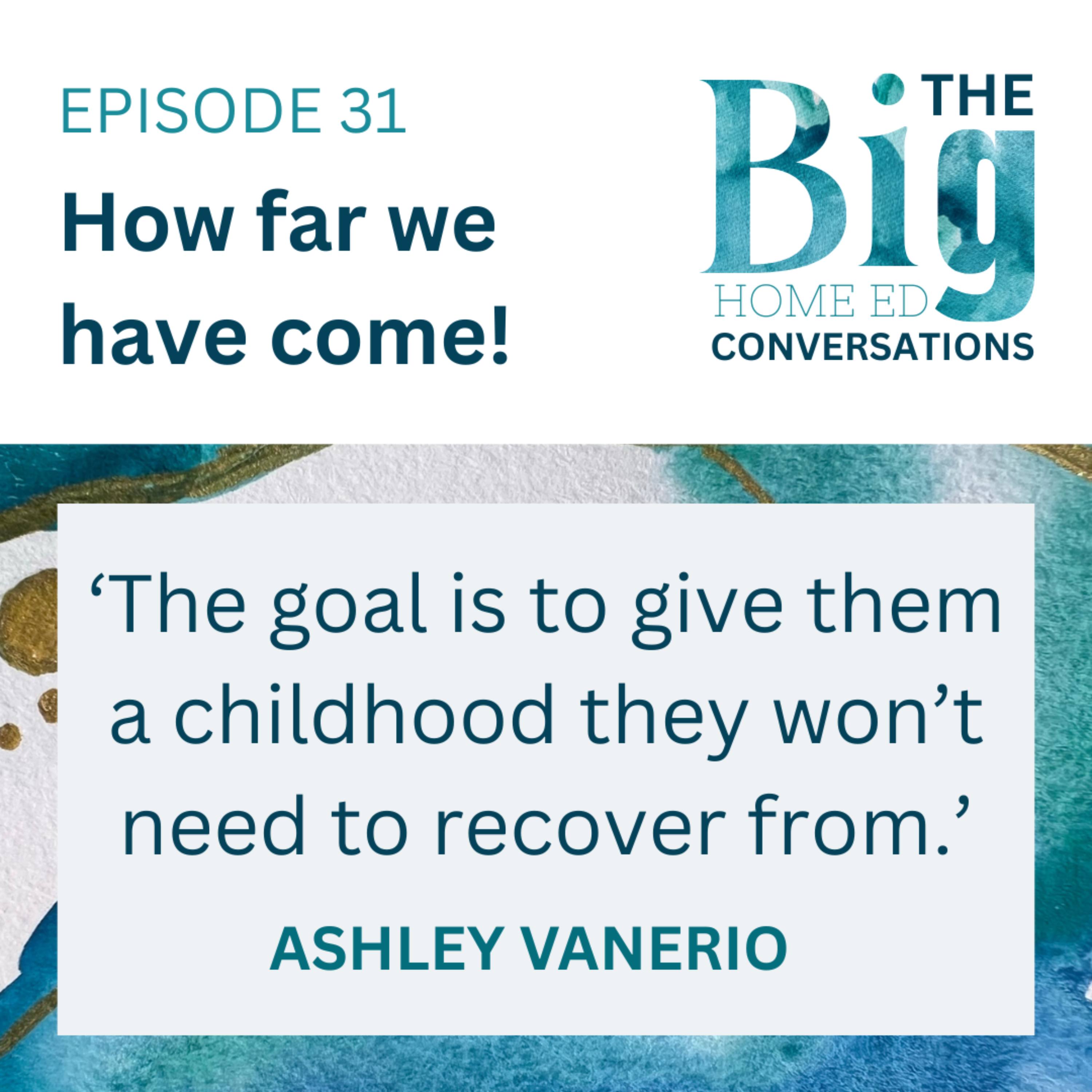
34:00 And that's the biggest challenge that we face, I think, as educators in any capacity, is getting kids to want to know it and to actually have a reason to. And that is the trickiest part of some of the more stuffy, boring bits, right? It's really hard sometimes. Yeah, and I'm not here to teach my kids to pass the test, right? And I feel like a lot of the times that's all we're doing is we're teaching them how to pass a test. And I, I want to focus on the parent child relationship because my true goal with all of this is to, I say this all the time to get my kids to adulthood without needing therapy, like from their childhood. Like I just want them to have a childhood they don't have to recover from, right?
34:41 That that's the goal. And then at the same time, I want them to build the relationship with themselves, like have a strong sense of self, self esteem, self worth, what they do matters. It impacts obviously them, our family, our community, like they, they have the ability to do that and to have a good relationship with education, right? They are going to be learning their entire lives. And I want them, like you said, to have the skill set to know where to go find information. How does that that information, how to then take that information and form their own opinions like that is important. And all we're doing right now in these earlier years is creating that relationship or fostering that relationship, that building that love of reading, that love of learning, that love of being able to go out and find something out for yourself, right to be self-sufficient. And I think that if we just keep, you know, building away at these habits, then once they get to the, the years that are a bit more important, right?
35:41 If they are going to decide to be a veterinarian, there is a lot of information they're going to have to learn. They're going to feel confident that they can do that. They're going to know how to do that. They're going to know how to budget their time and, and be able to study and, and do what they need to do to become a veterinarian or whatever that that career goal is that they have. So I, I think building that foundation is really all we're doing right now. I don't expect them to remember everything about World War One at the age of 8, right? But maybe we'll talk a little bit about it and learn about how history is important and it impacts our future, right? So those kinds of things. And I think it's also like, important to say it's like we want them to be. I think both as kind of sitting there thinking, actually, I want them to attend these like, amazing universities or to go on and do this incredible course one day or to do whatever they want to do.
36:30 But also I think what's going to be really great is that whereas a lot of us were raised to have very little self-care, to not prioritize ourselves, to make sure our mental health wasn't being constantly bombarded with criticism and comparison and competition and all these sorts of things which allow us to feel little and sad and frustrated and not actually able to kind of. Yeah. I just think there's an awful lot of my childhood that I felt spending, I spent feeling, Oh my goodness, today, my tongue that I, I really spent a lot of my time feeling very put down and judged and criticised. And the expectations on me was so high. And I think it's nice to have people believing in you and it's nice to have them wanting the best for you. But ultimately, when that comes at the expense of you having to prove yourself to that person, it makes it very, very difficult to actually take care of your mental health and to make sure that you actually go off into the workplace or go off to a university course or whatever it might be feeling like actually, I will do this and I will do well at it, but I'm going to make sure I'm taking care of me at the same time. And I matter.
37:38 And anyway, it's a, it's a really, really important thing to be thinking about. And I guess all of this comes down to values, like you say, and taking that time to really consider what your family values are. And if you're really not sure or if you're kind of both really divided or whatever, it's well worth having a really serious conversation around that because it's going to matter in so many different areas of what you choose to do next, and it will evolve. And so if you're also feeling like this is a lot and I have absolutely no idea if I'm going to actually make all this happen, just try and remember that it evolves. We're both years in and have gone through many, many, many iterations of what our life looks like and what we believe and what we see.
38:18 And I think that knowledge is so vital. So, yeah, so the last couple of things we wanted to talk to you guys about, I guess was the episodes that we think you guys should go back and listen to if you haven't already, because they have clearly been very popular episodes. And also to kind of give you guys the news and updates on kind of what's coming next and what we're what we're planning for the podcast and maybe what's coming down the line. And obviously, as always asking for your feedback on that because we want to make sure we are producing what you guys need. So first and foremost, I thought I'd read out to you guys what have been the top episodes in the last 12 months. Obviously, undeniably the episodes around the children's rubbing in schools bills have obviously done particularly well.
38:59 So the first one we did, can't think exactly what it was. I think it was roughly September, October time last year, I think was with Wendy, obviously Wendy, Charles Warner from Education otherwise. So we've had like the biggest ever response to an episode was that one. And so hopefully that really helped a lot of you guys as you're trying to understand what was coming up unequally. The recent one we've done with her kind of giving everybody an update is has come in 4th as our one of our fourth top episodes, which is incredible. So definitely go back and catch up with those if you haven't already. Those ones are super important anyway for the homemade community right now. So any knowledge you can get into your head around it. And it also helps just bring you clarity and calm, which I found really helpful as well.
39:39 But the next one was the expectations versus reality. Now, I think I can understand why this one ends up being quite popular, to be honest. As the title goes, I think considering what people think home Ed is going to be like versus what it actually has been like for us, I could imagine that's quite a fun conversation, Ashley. Exactly expectation the the reality is different, right? Yeah, it's. It's like that with everything. I plan a novel study and I have these Great Expectations and the reality is always different. Yeah, it's always different and I think having that headspace that actually we're allowed to have expectations, desires, wishes, etcetera, but actually things change and being open to that and just.
40:20 Yeah, bouncing back, I guess from moments that feel really frustrating and really hard. But yeah, I definitely go back and listen to. That was one of our second most popular episode ever. And then the next one is our year and reflection, which surprised me because I've always wondered if like the day in the life talking about us and our backgrounds, like was really that important in this kind of side of things. But actually it seems that quite a lot of you enjoyed that. So. So yeah, we'll definitely try and do some more posts around that. At times a bit like this one, I guess. But just kind of reflecting on, I guess that was more to do with what we've been up to, like the things that we'd used, like the places we'd been, the stuff we really loved. So that went really well. Yeah, we'll do more of that. And then lastly, it was the evolving home Ed, which is quite a recent episode actually.
41:05 And that was us talking about how things are starting to shift in the homemade community. Obviously, there's a massive increase since COVID of people coming into the homemade community both across the pond in America and here in the UK and obviously in other parts of the world as well, where so many parents have decided they want to take back some of their power in terms of educating their children. And they want to kind of, yeah, just regain a lot of that family time. And they've seen their kids really thriving and wanted to do it forever. So that's really beautiful. And I think it's definitely made a lot of people realise that this is a choice, but it is upsetting the apple cart a little in the home made community in terms of just as you can imagine, a tidal wave of new people coming into what has been an established community of kind of hardcore beliefs. There's a real need to understand how to integrate with that and how to continue to support it and to help it to expand gently and respectfully and adding more to it as more of us come into the community as well. Like we are all adding our amazing skills to it as we go along.
42:04 So yeah, I think that's, it's really exciting, but it was a good episode. I enjoyed recording that one. It's a very big passion of mine at that time. That was really nice about all of these actually. Is that a lot of the episodes we've done, they're usually decided within a week or two of actually recording them because they are what we are thinking about and have in our heads right then, aren't they? Actually, they're never. They're very rarely things we talked about months ago. Well, we have those too. We do have a plan that comes out and then we'll get to it and we'll say, do we really feel like talking about this this week? I think we should talk about this. Yeah, I was going to say we try, don't we? Was the plan never actually fully comes into action. It helps though. It does help. It does help. We thank them for later.
42:45 Yeah, when we can't think of anything sub weeks, it helps us out. Yeah. So, yeah. So I thought I don't know if that goes that is helpful for you guys to know that those are the kind of the top performing episodes that go back and have a little look and have a little listen and tell us if if you agree that they should be up there really. But yeah, we've we've we've noticed recently. So they're kind of on a NEWS UPDATE side of things. The podcast has been growing tremendously in the past 3-4 months. We are literally seeing a steady significant like 2530% growth every single month again, on top of the last month, which is just amazing and so exciting to see. We've recently made sure that it's published across YouTube and also Amazon Music. So it's now on a couple more platforms. So wherever you prefer to listen, you can now get it. And equally like we, I've also started to do some some great interviews as well.
43:32 So obviously we've had Wendy on and we've also got a couple of people in the pipeline. I've been having conversations with Ginny Urich from 1000 hours outside, which is super exciting. I'm hoping to get her on later this year. And also a lady called Luna who is a Weld scholar at the moment. We know this simply because it's taken us a good 3 or 4 back and forth to try and figure out where she's going to be and the time zone she's going to be in and whether or not we can coordinate a recording session at a time zone that makes sense for us all in a certain week coming up, which is exciting. So that'll be in a couple of weeks time. But that's really 100% off the back of me being like obsessed with this idea right now and wanting to get into it a bit more and actually talk about why, why we have this massive fear of it and actually what the reality is like. And they seem like they, they seem definitely our vibe. I've had a good listen through their content. So I'm, I'm really excited to have a chat with her and to hear her, her insights really as to how she's been experiencing home education on the road.
44:32 They'll be in Vietnam when we talk to her, which is really exciting. So to hear a little bit about that too. But yeah, so there's so many great conversations potentially coming up. We'll be taking a short break as always, over kind of August time. We will be posting some little mini episodes. So me and Ashley are going to record some little separate ones just because travel and holidays and things just means that we're going to be in different places at different times. It's going to be a bit tricky to try and get us together. So we're going to try and have a bit of fun really. Ashley is going to bring you some various different episodes. She's going to tell you a bit about kind of maybe some of the books that she's been reading that she really loves also. So Instagram accounts and stuff that she really likes and things like that. Trying to help you guys to understand how to like really cultivate your feed a bit as well and make sure you get all the right stuff, like some really good resources and things. And I'm going to be talking to you guys about kind of getting your head straight to home educate as well. So I'm going to be getting into some of the initial like early mindset shifts that need to start happening for you to start feeling relaxed as you get into the home Med flow. So, yeah, so that's going to be a little bit of what we do over the summer.
45:30 So we've got lots of really exciting stuff coming up. Actually, we've got sort of various different people reaching out to us to try and partner with us as well, which is really, really exciting and definitely shows the podcast is starting to get some gravitas now. So thank you to every single one of you who do TuneIn and listen, because it's you who's got us there. And yeah, just that's that's pretty much it, I think. In terms of news and updates. Is there anything else you wanted to add? Ashley I. Think you've covered everything? Yeah. So we're just looking forward to the summer months and then coming into another school year here. Yeah. So a couple more proper episodes for you guys and then we'll probably break a bit over the summer and then we'll be back as noise in September. So, yeah, so carry on tuning in. Obviously, we're going to try and keep the momentum up, keep some episodes coming out to you so that you're not stuck without us for a few weeks, which I know be very sad to say. It's a bit of humble this then, but we'll definitely look forward to seeing you all back again in September with some really great interviews lined up as well. So let us know.
46:23 Please send us a message over on our usual places if you want us to actually reach out to anybody, tag tag us on their posts or something if you want us to know about it so that we know that this is someone who you want us to reach out to because we'd love to obviously bring you what you want to be talking about. So all good. All right, guys, have a fantastic week and we'll see you again next week. Bye, guys. You've been listening to the Big Home Ed Conversations podcast. Thanks for tuning in. Don't forget to subscribe, leave a review, and share with a friend. Follow us on Instagram and TikTok at Big Home Ed Podcast for updates. And we can't wait to see you next week where we talk about how our schedules and schooling change leading into and over the summer break.
47:07 And remember, if you want us to talk about a topic, do let us know. We love hearing from you. Until next time, take care.